

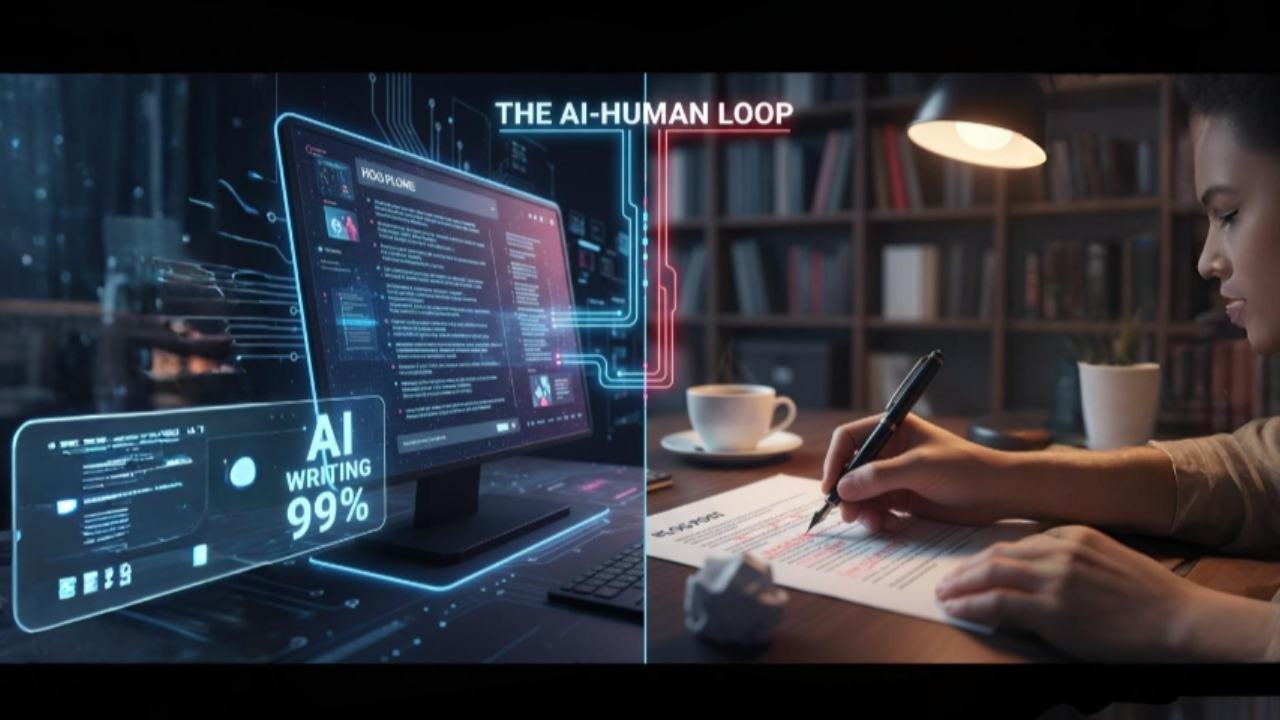
Artificial Intelligence (AI) has changed the way we create content. From brainstorming blog ideas to drafting full-length articles in seconds, AI tools like ChatGPT, Jasper, and Copy.ai have revolutionized how marketers, writers, and brands produce text. They’re fast, efficient, and surprisingly creative.
But despite these advances, there’s one truth that remains constant: AI-generated content still needs human editing.
While AI can write, summarize, and optimize content with impressive accuracy, it lacks something essential — the nuance, emotion, and critical thinking that only humans can provide. In the world of content creation, technology may assist, but human expertise ensures that the final product is authentic, accurate, and impactful.
Let’s explore why AI writing tools need human oversight, what risks arise without it, and how to build a balanced approach that blends automation with human creativity.
The Rise of AI in Content Creation
Not long ago, content creation was entirely manual. Marketers brainstormed ideas, writers drafted copy, and editors refined tone, grammar, and structure. Today, AI writing tools have made the process dramatically faster and more scalable.
AI systems use natural language processing (NLP) and machine learning to understand context, grammar, and semantics. They analyze massive datasets to generate text that sounds human — and often reads like it too.
Modern AI writers can:
- Generate articles, emails, and ads in minutes
- Suggest headlines and SEO keywords
- Rewrite or rephrase existing content
- Maintain tone consistency
- Personalize messages for different audiences
These capabilities save time and reduce costs, making AI a powerful ally for marketers. Yet, even the best AI cannot fully replicate human judgment and creativity — and that’s where editing becomes essential.
Why AI Alone Isn’t Enough
AI can be a brilliant assistant, but it isn’t perfect. Its language is based on patterns, not understanding. It predicts what words should come next, but it doesn’t truly comprehend the meaning behind them.
This leads to several limitations that only human editors can fix. Let’s break them down.
- AI Lacks Contextual Understanding
AI models generate content based on existing data — but they don’t understand real-world context.
For instance, if you ask an AI to write about “Apple,” it might confuse the technology company with the fruit, depending on your input. Similarly, when writing about complex industries like finance, healthcare, or law, AI may misinterpret key concepts or produce vague generalizations.
Human editors ensure the content is contextually accurate and relevant to the target audience. They can spot inconsistencies, clarify meanings, and make sure the message aligns with brand goals.
- AI Struggles with Tone and Emotion
Great writing connects emotionally. It inspires, persuades, and resonates with readers on a human level. AI can imitate tone, but it doesn’t feel emotions — it only mimics them.
A human editor can sense when a paragraph feels cold, when humor misses the mark, or when empathy is missing from customer-facing messages. They refine phrasing and rhythm to ensure that the writing feels authentic and emotionally intelligent — something AI alone can’t guarantee.
- Fact-Checking and Accuracy Issues
One of the biggest risks of AI writing is inaccurate or fabricated information. AI models don’t verify facts — they generate plausible-sounding text based on probability, not truth.
This can lead to:
- Outdated statistics
- Incorrect claims
- Misattributed quotes
- Nonexistent studies
A human editor plays a vital role in fact-checking and verifying sources to maintain credibility. Especially in industries like health, law, or finance, even small inaccuracies can damage trust and reputation.
- Ethical and Legal Considerations
AI doesn’t inherently understand ethics, copyright, or originality. It may unintentionally reproduce phrases or ideas from its training data, which raises plagiarism concerns.
Moreover, AI-generated text can sometimes reinforce biases present in the data it was trained on — leading to language that’s discriminatory, insensitive, or misleading.
Human editors are essential for:
- Detecting unintentional plagiarism
- Removing biased or culturally insensitive phrases
- Ensuring compliance with brand ethics and legal standards
In short, human oversight keeps AI writing safe, responsible, and original.
- SEO Optimization Needs a Human Touch
AI writing tools can optimize for search engines by suggesting keywords and structuring headings. But SEO isn’t just about algorithms — it’s about user intent and engagement.
An editor understands how readers think, what questions they ask, and how to make content flow naturally while maintaining keyword balance.
Human editing ensures that:
- Keywords are integrated organically
- Content reads smoothly and conversationally
- Meta descriptions and titles attract clicks
- Internal and external links make sense
Without human involvement, AI-optimized articles risk sounding mechanical — which can hurt both readability and rankings.
- Brand Voice Consistency
Every brand has a unique tone — whether it’s friendly, authoritative, humorous, or professional. AI can emulate different tones, but it often struggles to maintain them consistently across multiple pieces of content.
A human editor ensures every blog, email, or ad aligns with your brand identity. They fine-tune phrasing, punctuation, and vocabulary so your content doesn’t just sound correct — it sounds like you.
- Creativity and Storytelling
AI excels at generating structured information, but it can’t innovate or tell stories with emotional depth. It can summarize “what” and “how,” but it often misses the “why.”
Human editors infuse writing with:
- Metaphors and analogies that make ideas memorable
- Narratives and examples that engage readers
- Insights and opinions that show expertise
This blend of logic (AI) and creativity (human) is what turns average content into remarkable storytelling.
The Role of Human Editors in the AI Era
Rather than replacing editors, AI has made their role more strategic. Editors are now less focused on manual corrections and more on content enhancement — guiding AI outputs toward clarity, tone, and brand alignment.
Here’s how human editors add value to AI-written content:
- Review for accuracy — verifying data, sources, and statistics.
- Refine language — improving flow, clarity, and readability.
- Enhance tone — adjusting emotional appeal and brand voice.
- Ensure originality — checking for plagiarism and repetitive phrasing.
- Add human insights — injecting expertise, humor, or personality.
- Optimize for engagement — ensuring the content informs and inspires.
AI may generate a draft, but editors transform it into something that truly resonates.
The Perfect Partnership: AI + Human Editing
The smartest approach to modern content creation isn’t choosing between AI or humans — it’s combining them.
Here’s what that partnership looks like in practice:
- AI handles repetitive and time-consuming tasks: drafting, summarizing, formatting, keyword insertion.
- Humans handle creative and strategic tasks: refining ideas, shaping narratives, ensuring authenticity.
This collaboration allows teams to scale content without sacrificing quality. It also frees human writers to focus on storytelling, strategy, and innovation — areas where AI can’t compete.
How to Edit AI-Generated Content Effectively
To get the most out of AI tools, follow these best practices when editing:
- Read the draft as a human reader. Ask yourself if it makes sense, feels natural, and aligns with your intent.
- Check facts and citations. Never assume AI got them right.
- Simplify where needed. AI can produce overly complex or repetitive text.
- Personalize. Add examples, case studies, or opinions to make content unique.
- Polish tone and rhythm. Ensure transitions and flow feel organic.
- Proofread manually. AI grammar tools help, but final eyes catch what algorithms miss.
Think of AI as the first draft — and human editing as the final craftsmanship.
Conclusion
AI has transformed content creation forever. It can write faster, research smarter, and optimize better than ever before. But at its core, AI lacks human empathy, creativity, and judgment — the very qualities that make writing truly powerful.
That’s why AI-generated content still needs human editing. It’s the difference between writing that simply informs and writing that inspires.
When humans and AI work together, the results are extraordinary: content that’s data-driven yet emotional, efficient yet authentic, and intelligent yet deeply human.
In the age of automation, human editors aren’t becoming obsolete — they’re becoming more important than ever.
About the Author


