

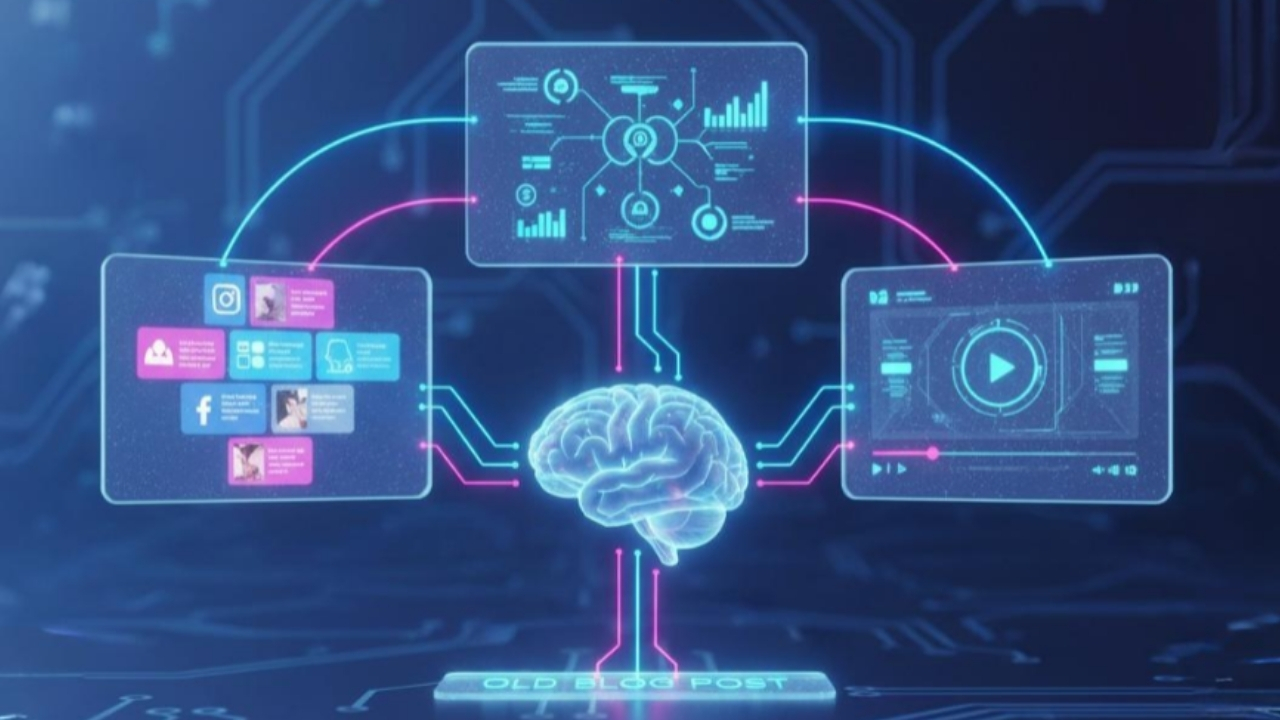
In the fast-moving world of digital marketing, keeping up with a steady stream of fresh, engaging content can be challenging. Yet, not every piece of content needs to be created from scratch. Often, your best-performing material is already sitting in your archives — blog posts, social media updates, newsletters, or videos that once captured attention but have since faded into the background.
Enter Artificial Intelligence (AI) — the ultimate game-changer for modern marketers. AI can help you repurpose old content efficiently, transforming existing material into new formats, updated insights, and fresh narratives that reach wider audiences. It saves time, reduces costs, and helps maintain consistency across multiple platforms.
In this guide, we’ll explore how AI can breathe new life into your existing content, the best tools to use, and the strategies to make your repurposed content stand out in 2025 and beyond.
Why Repurpose Content?
Before diving into AI-driven repurposing, let’s understand why it matters.
Repurposing content means taking existing material and reusing it in a new way. It’s not about copying and pasting — it’s about reimagining.
Here’s why it’s a powerful strategy:
- Saves Time and Resources: Creating content from scratch requires research, writing, editing, and optimization. Repurposing cuts that effort in half.
- Extends Content Lifespan: High-performing blog posts or videos can continue generating traffic if updated or reintroduced in new formats.
- Reaches New Audiences: Some people prefer reading, others like videos or infographics. Repurposing allows you to deliver the same message in multiple ways.
- Boosts SEO Performance: Updating old content with new keywords and data improves search rankings.
- Builds Consistency: It helps maintain a steady content flow without burning out your marketing team.
Now, with the help of AI, this process becomes even faster and smarter.
How AI Transforms Content Repurposing
AI tools today go beyond automation — they analyze data, understand tone, summarize ideas, and even optimize for SEO. When applied to old content, AI can identify what’s working, what needs updating, and how to present it in new ways.
Here’s how AI enhances the repurposing process:
- Content Discovery and Analysis
Before repurposing, you need to identify which old pieces are worth reviving. Manually, this can take hours. But AI tools like MarketMuse, Clearscope, or SurferSEO can analyze your entire content library in minutes.
They evaluate:
- Traffic performance (via Google Analytics data)
- Engagement metrics (bounce rate, time on page)
- SEO opportunities (keyword gaps, ranking difficulty)
AI helps you pinpoint which posts have strong potential for an update — perhaps because the topic is evergreen, the keywords are still relevant, or the article has untapped ranking potential.
- Updating and Refreshing Content
AI writing assistants such as ChatGPT, Jasper AI, or Writesonic can help rewrite or enhance your old content while maintaining the original context.
For example:
- Update outdated statistics using AI-assisted research prompts.
- Rewrite sections for clarity and tone alignment.
- Expand short posts into long-form articles by adding related insights or FAQs.
- Modernize language to align with today’s audience trends.
This process ensures your content stays accurate, engaging, and search-friendly — even years after it was first published.
- Turning Blogs into Social Media Posts
Long-form articles can easily be broken down into bite-sized social media content using AI.
For instance, tools like ChatGPT, Copy.ai, and Anyword can:
- Generate tweet threads from your blog paragraphs.
- Summarize key points into LinkedIn posts or carousels.
- Create Instagram captions with relevant hashtags.
- Draft Facebook post variations for A/B testing.
AI understands platform-specific nuances, helping you tailor tone and structure to fit different audiences — without having to rewrite everything manually.
This not only boosts reach but also strengthens your brand presence across multiple channels.
- Converting Text into Video or Audio Content
AI has made multimedia repurposing easier than ever. Tools like Pictory, Lumen5, or Synthesia can convert blog posts into videos automatically, complete with visuals, background music, and even voiceovers.
Similarly, AI voice tools like Descript or Play.ht can transform written content into podcasts or audio summaries.
This means one well-written blog post can evolve into:
- A YouTube explainer video
- A short TikTok clip
- An audio version for your podcast
- A social reel for Instagram
By using AI to repurpose text into multiple media formats, you can reach audiences who prefer watching or listening instead of reading.
- Creating Infographics and Visuals
Visual content is crucial for engagement, but design work can be time-consuming. AI tools like Canva’s Magic Design, Visme, and Designs.ai can automatically generate graphics, charts, and infographics from existing text.
For example, AI can summarize your blog post into a visually appealing infographic that highlights main points, statistics, or quotes.
This approach is perfect for sharing on Pinterest, LinkedIn, or within presentations — turning static text into dynamic visuals that attract attention and shares.
- Repurposing into Email Campaigns
Old blog posts often contain timeless insights that can be reimagined into email newsletters or drip campaigns.
AI-powered email platforms like HubSpot AI, Flowrite, or Copy.ai Email Writer can help you craft engaging emails based on your existing content.
Here’s how it works:
- Input a blog post or paragraph.
- The AI summarizes the key takeaways.
- It then generates an email introduction, subject line, and call to action.
Within minutes, your archived content becomes a fresh email series that re-engages your subscribers.
- SEO Optimization and Reformatting
AI doesn’t just rewrite content — it helps optimize it for modern search engines.
Using AI tools like Frase, SurferSEO, or NeuronWriter, you can identify:
- Keyword opportunities you missed before
- Relevant questions to include
- Better heading structures (H1, H2, H3)
- Internal and external linking opportunities
By integrating these updates, you give your old content new life — helping it rank higher in 2025’s ever-evolving search algorithms.
Best Practices for AI-Powered Content Repurposing
To ensure quality and consistency, human oversight remains crucial. AI can generate ideas and drafts, but editors bring the final polish and strategic direction.
Here are best practices to follow when repurposing old content using AI:
- Start with High-Performing Content – Use analytics to find evergreen topics with consistent engagement.
- Fact-Check Everything – AI can pull in outdated or incorrect information. Always verify data and sources.
- Preserve Your Brand Voice – Fine-tune AI outputs to match your tone and personality.
- Add Fresh Value – Don’t just recycle. Add new perspectives, examples, or insights.
- Use AI as an Assistant, Not a Replacement – Combine AI’s speed with your creative judgment for the best results.
- Track Performance – Measure engagement metrics to see how repurposed content performs versus new material.
Example: Turning a 2019 Blog into a 2025 Powerhouse
Imagine you wrote a blog in 2019 titled “The Future of Social Media Marketing.”
Here’s how you could use AI to revive it in 2025:
- Analyze performance using AI SEO tools to find keyword gaps.
- Update statistics and examples using ChatGPT or Jasper.
- Rewrite the introduction for modern relevance — referencing trends like AI influencers or the metaverse.
- Convert it into a video using Pictory or Lumen5.
- Break it down into LinkedIn posts summarizing key takeaways.
- Send a newsletter linking to the refreshed post.
With AI, you’ve turned one outdated blog into a complete multi-channel campaign — in hours, not weeks.
The Future of Content Repurposing with AI
AI will continue to revolutionize how marketers handle content. Future tools will be able to automatically detect outdated information, rewrite content for different audiences, and even predict the formats most likely to perform well.
However, human creativity will always play the guiding role. While AI can handle mechanics and structure, humans bring emotion, empathy, and storytelling — the elements that truly connect with audiences.
Conclusion
Repurposing old content isn’t just about saving time — it’s about maximizing value from what you’ve already created. AI gives you the power to transform existing assets into new, engaging, and relevant materials that work across every channel.
Whether it’s rewriting a blog, turning it into a video, or crafting an email series, AI helps you scale your content strategy without sacrificing quality.
The key is balance: let AI do the heavy lifting while you focus on strategy, voice, and creativity. When technology and human insight work together, your old content can find new life — and your brand can continue to grow without limits.
About the Author


