

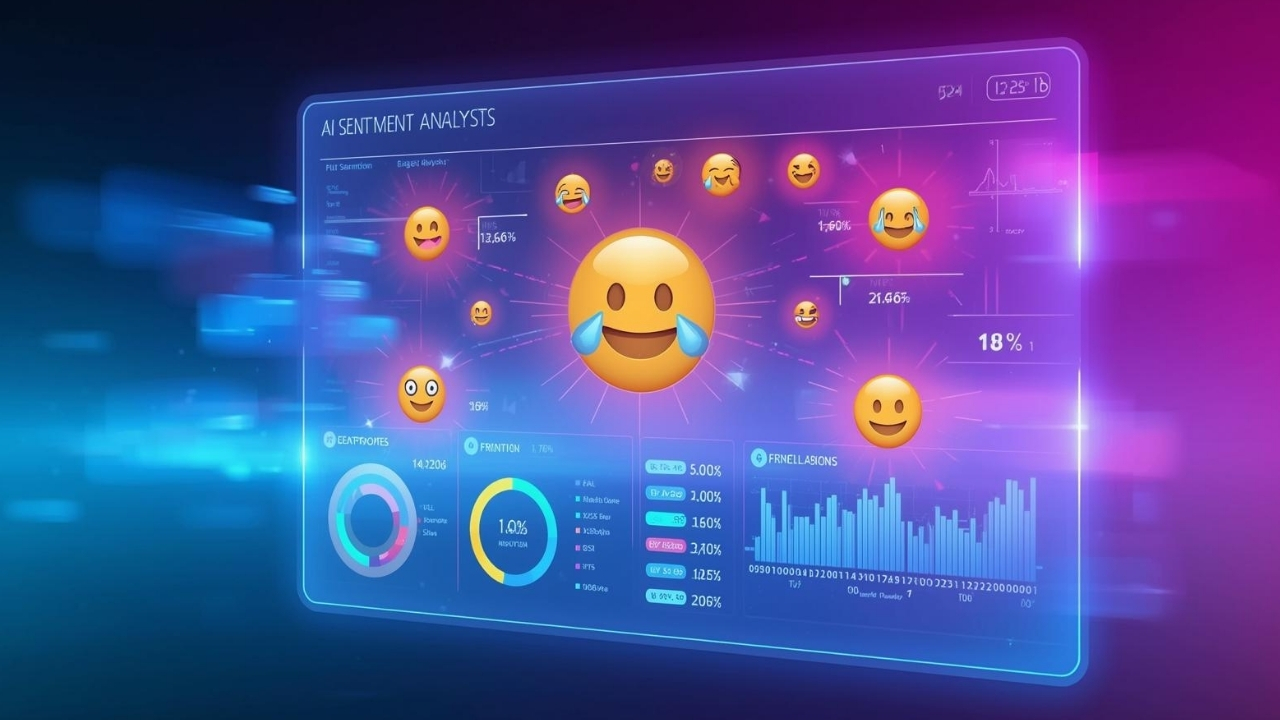
In the modern digital landscape, data is power — and understanding how your audience feels about your brand is more important than ever. Social platforms have become a 24/7 feedback machine where customers share their thoughts, frustrations, and praise openly. But with millions of posts, tweets, and comments being shared daily, it’s nearly impossible for marketers to manually interpret all that emotional data.
That’s where Artificial Intelligence (AI) steps in.
AI-powered sentiment analysis tools can scan thousands of social posts in real time, interpret emotions behind the words, and provide insights that help brands make smarter decisions. In short, AI doesn’t just tell you what people are saying — it helps you understand how they feel.
In this blog, we’ll explore how AI is transforming audience sentiment analysis, why it matters for brands, what tools are leading the charge, and how you can integrate AI-driven sentiment insights into your marketing strategy.
What Is Sentiment Analysis?
Sentiment analysis — sometimes called opinion mining — is the process of using technology to identify and categorize opinions expressed in text, especially to determine whether the writer’s attitude toward a particular topic is positive, negative, or neutral.
On social platforms like X (formerly Twitter), Instagram, TikTok, or LinkedIn, sentiment analysis can help marketers uncover how users truly perceive a product, campaign, or even a brand’s overall reputation.
For example:
- A sudden spike in negative sentiment may indicate a PR issue or customer dissatisfaction.
- Consistent positive sentiment could mean a campaign is resonating well with audiences.
- Neutral sentiment might signal that the message isn’t emotionally engaging enough.
Traditionally, sentiment analysis required teams of analysts reading through posts manually — an impossible task at scale. AI now automates this entire process, analyzing millions of data points in minutes.
How AI Analyzes Sentiment
AI-powered sentiment analysis relies on several advanced technologies that work together to interpret language at scale.
- Natural Language Processing (NLP)
NLP enables computers to read and understand human language. It breaks down sentences into smaller components, identifies keywords, and determines emotional cues based on context, tone, and syntax.
For instance, the word “sick” could mean something positive (“That new phone is sick!”) or negative (“I feel sick after using that app”). AI systems trained with NLP models learn to distinguish these differences using contextual patterns.
- Machine Learning (ML)
Machine learning models improve sentiment detection over time. By analyzing massive amounts of labeled data (texts tagged as positive, negative, or neutral), the AI learns to recognize sentiment patterns and predict the emotional tone of new messages accurately.
- Deep Learning & Contextual Understanding
Advanced deep learning models like transformers (used in GPT and BERT) take sentiment analysis to the next level by understanding contextual nuances, sarcasm, and emotional intensity.
For example, the sentence:
“I just love waiting 45 minutes for customer support.”
would be flagged as negative by an AI trained in sarcasm recognition.
- Multilingual Analysis
AI tools can analyze sentiment in multiple languages and dialects, helping global brands understand audiences across different regions — something manual analysis could never achieve at scale.
Why Audience Sentiment Matters
Audience sentiment is one of the most valuable metrics for modern marketers because it provides direct insights into brand perception.
Here’s why it’s critical:
- Real-Time Brand Reputation Monitoring
AI sentiment analysis tools continuously scan social media, detecting shifts in public perception as they happen. This allows brands to respond to issues before they escalate.
For example, if negative comments about a product defect start trending, AI tools can alert the marketing or PR team immediately — enabling a proactive response instead of damage control.
- Better Product Development
By analyzing customer feedback and conversations, companies can identify pain points, feature requests, or emerging needs. This data helps product teams improve offerings and innovate based on real audience sentiment.
- Data-Driven Marketing Decisions
Understanding audience mood helps marketers create campaigns that resonate emotionally. Instead of guessing, you can craft messaging aligned with how your customers actually feel.
- Competitive Intelligence
Sentiment analysis doesn’t just apply to your own brand — you can track competitors too. AI can monitor how audiences feel about rival products or services, revealing opportunities to position your brand more effectively.
AI Tools That Analyze Sentiment on Social Platforms
Several AI-driven platforms have emerged as leaders in sentiment analysis, each offering unique strengths:
- Brandwatch
A powerful social listening tool that uses AI to analyze audience sentiment across platforms like Twitter, YouTube, and Reddit. It offers real-time alerts and visual dashboards to track mood trends over time.
- Sprout Social
Sprout integrates AI sentiment tracking directly into its social management dashboard, giving marketers a clear view of brand perception alongside engagement metrics.
- Talkwalker
Talkwalker’s AI-powered engine detects not just textual sentiment but also visual sentiment — analyzing images, logos, and even emojis to determine audience emotions.
- Hootsuite Insights
Powered by Brandwatch, this tool helps social media managers monitor brand health and track sentiment fluctuations instantly.
- Lexalytics & MonkeyLearn
These AI platforms specialize in natural language analysis, helping brands customize sentiment analysis for niche industries or languages.
These tools make it easy for brands to listen, understand, and act on what audiences are saying across the digital ecosystem.
Challenges in AI-Driven Sentiment Analysis
While AI sentiment analysis is powerful, it’s not perfect. Understanding human emotion is a complex task — even for machines.
Here are some key challenges:
- Sarcasm and Irony
Humor and sarcasm can mislead AI if not trained properly. Phrases like “Oh great, another app update that breaks everything” might be tagged as positive without context.
- Evolving Slang and Emojis
Social media language changes rapidly. Slang terms and emojis evolve faster than AI models can adapt, sometimes leading to misinterpretation.
- Cultural Differences
A word that’s positive in one region might have a negative connotation elsewhere. Global brands must ensure their AI models are trained on culturally diverse data.
- Data Bias
AI learns from historical data — if that data contains bias, the sentiment model may reflect it. Ongoing retraining and human oversight are essential for accuracy.
Despite these limitations, AI sentiment analysis continues to grow more sophisticated every year, especially as models become more context-aware and multilingual.
Integrating AI Sentiment Analysis into Your Marketing Strategy
Here’s how you can start using AI sentiment analysis effectively:
- Set Clear Objectives
Determine what you want to measure — brand perception, campaign effectiveness, or product feedback. Clear goals guide the type of sentiment data you should collect.
- Choose the Right Tool
Select an AI platform that fits your business needs, budget, and preferred social channels. Some tools specialize in real-time monitoring, while others focus on long-term trend analysis.
- Monitor in Real Time
Use AI to continuously track audience sentiment, especially during key events like product launches or ad campaigns. Early insights can help you pivot strategy fast.
- Combine Quantitative and Qualitative Data
Sentiment scores (positive, neutral, negative) provide the “what,” but analyzing comments and posts gives you the “why.” Use both for a complete picture.
- Human Validation
Always have human analysts review AI findings, especially for nuanced or high-stakes insights. Human oversight ensures accuracy and prevents misinterpretation.
The Future of Sentiment Analysis
As AI technology evolves, the future of audience sentiment analysis will move beyond simple text interpretation toward emotion recognition and predictive analytics.
Upcoming trends include:
- Voice sentiment analysis: Detecting tone and emotion in spoken feedback.
- Facial emotion tracking: Understanding audience reactions through video analysis.
- Predictive sentiment modeling: Forecasting future audience reactions before a campaign even launches.
These advancements will allow brands to anticipate customer emotions rather than merely react — creating a new frontier in personalized, emotionally intelligent marketing.
Conclusion
In today’s social-first world, success depends not just on what audiences say, but how they feel.
AI sentiment analysis gives brands a powerful lens to understand audience emotions at scale — transforming millions of unstructured comments into actionable insights. It enables faster responses, smarter campaigns, and stronger connections with customers.
However, the best results come from a balance of AI precision and human empathy. Machines can identify patterns and trends, but humans bring context, creativity, and emotional understanding.
Together, they form the future of audience analysis — one that’s real-time, intelligent, and deeply human at its core.
About the Author


