

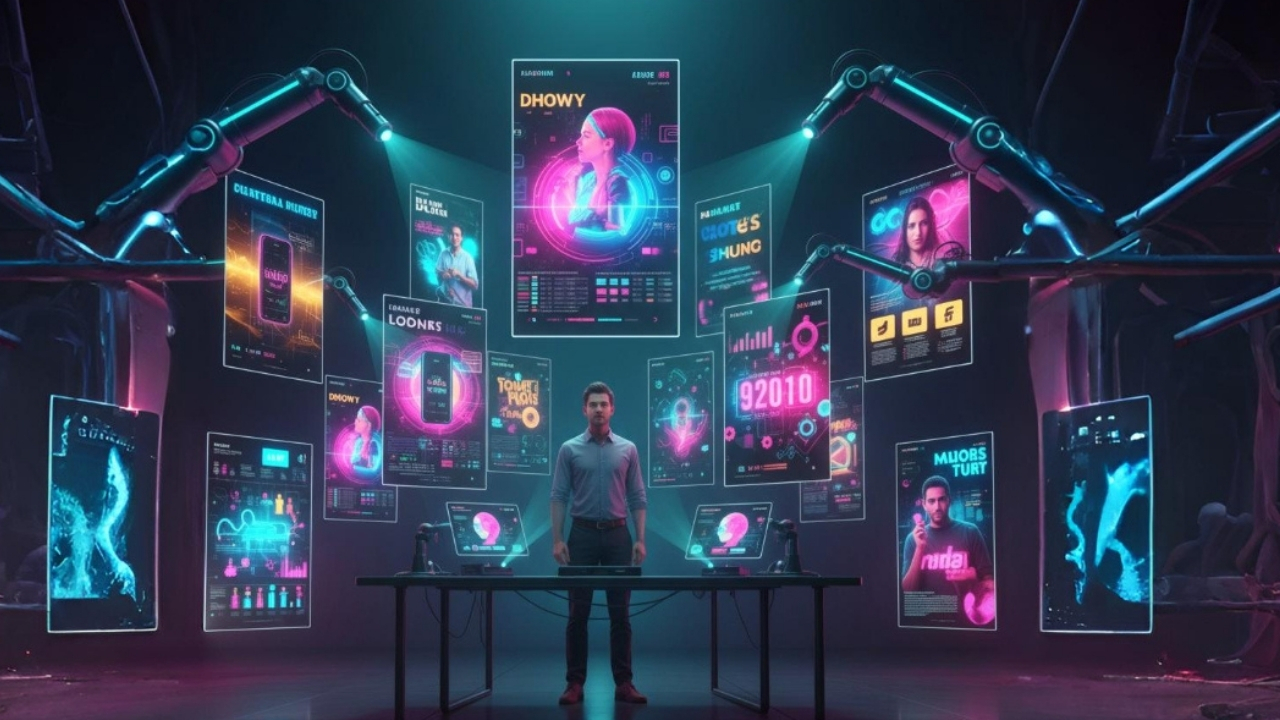
The advertising industry is undergoing a profound transformation. With the proliferation of digital channels and the insatiable demand for engaging content, brands are seeking innovative ways to capture attention and connect with consumers. Enter AI-generated visuals—a technology that is rapidly changing how marketers create, deploy, and optimize advertising campaigns.
From social media ads to billboards, AI is no longer just a supporting tool; it is becoming a central driver of creative strategy, enabling marketers to produce high-quality visuals faster, more cost-effectively, and with unprecedented personalization.
This article explores the rise of AI-generated visuals in advertising, including how the technology works, its benefits, applications, and considerations for marketers.
What Are AI-Generated Visuals?
AI-generated visuals refer to images, graphics, or multimedia content created by artificial intelligence algorithms rather than traditional human designers. These visuals can range from realistic product images to imaginative, stylized illustrations. The technology powering AI visuals typically relies on:
- Generative Adversarial Networks (GANs): A type of AI that can generate entirely new images by learning patterns from existing data.
- Text-to-Image Models: AI systems, such as DALL·E or MidJourney, that create images based on textual descriptions or prompts.
- Style Transfer Algorithms: Tools that apply artistic styles or visual effects to existing images to produce creative variations.
The combination of these technologies allows advertisers to create professional-quality visuals without extensive design expertise or costly production resources.
Why AI-Generated Visuals Are Rising in Popularity
The adoption of AI-generated visuals in advertising is fueled by several factors:
- Speed and Efficiency
Traditional advertising production often involves photography, video shoots, and design iterations, which can take days or weeks. AI-generated visuals can produce images within minutes, allowing marketers to accelerate campaign timelines.
- Cost-Effectiveness
Producing high-quality visuals typically requires studio rentals, photographers, models, and designers, which can be expensive. AI reduces the need for physical resources, enabling brands to experiment with multiple creative concepts without breaking the budget.
- Scalability
Brands managing hundreds or thousands of products need visuals for multiple platforms. AI allows advertisers to scale visual content creation quickly and consistently, maintaining quality across all assets.
- Personalization
AI-generated visuals can be tailored to individual preferences, geographic regions, or audience segments. This level of personalization enhances relevance and engagement, which is critical in an age of consumer expectations for customized experiences.
- Creative Experimentation
AI encourages marketers to explore styles, concepts, and compositions that may be impractical or impossible to achieve manually. This opens the door to more imaginative and attention-grabbing campaigns.
Applications of AI-Generated Visuals in Advertising
AI-generated visuals are being deployed across a variety of advertising channels and formats:
- Social Media Campaigns
Social media platforms thrive on visual content. AI allows marketers to create diverse, eye-catching images optimized for feeds, stories, and ads. For instance, an AI tool can generate multiple variations of a product image with different backgrounds, lighting, and styles, enabling rapid A/B testing to determine the most engaging visuals.
- Display and Programmatic Ads
Display advertising benefits from AI’s ability to produce thousands of creative variations. Programmatic platforms can automatically deliver the most relevant visual to a specific audience, increasing click-through rates and return on ad spend (ROAS).
- E-commerce Visuals
Retailers and e-commerce brands use AI-generated images to populate online catalogs, generate product mockups, or showcase items in different contexts. AI can also create lifestyle imagery that demonstrates product use, enhancing the customer shopping experience.
- Email Marketing
Email campaigns can be enriched with AI visuals to grab attention in crowded inboxes. Personalized banners, product images, and graphics increase engagement and drive conversions, especially when combined with AI-driven segmentation.
- Video Advertising
AI can assist in video ad production by generating backgrounds, motion graphics, or character animations. Combined with text-to-video AI models, brands can quickly produce dynamic content for YouTube, TikTok, and other platforms without traditional video production costs.
- Outdoor and Print Advertising
Even traditional channels like billboards, posters, and magazines are seeing AI adoption. By generating high-resolution visuals quickly, advertisers can reduce production time and adapt creative concepts to different locations or audiences with minimal effort.
Benefits of AI-Generated Visuals in Advertising
- Faster Time-to-Market
AI allows brands to respond quickly to trends, seasonal campaigns, or competitor movements. This agility can be a significant competitive advantage in fast-moving industries.
- Enhanced Creativity
AI-generated visuals introduce novel styles and imaginative concepts that may not emerge from human brainstorming alone. This encourages bolder, more distinctive advertising campaigns.
- Increased Engagement
Personalized and visually appealing content is more likely to capture audience attention, leading to higher engagement, clicks, and conversions.
- Lower Costs
By reducing reliance on traditional production, brands save on photography, design, location scouting, and talent fees, freeing resources for strategy and campaign optimization.
- Continuous Optimization
AI-generated visuals can be tested and refined in real-time. Marketers can experiment with variations and instantly deploy the highest-performing visuals across channels.
Best Practices for Using AI-Generated Visuals
To get the most out of AI in advertising, marketers should follow these best practices:
- Define Clear Objectives
Before generating visuals, clarify the goal: brand awareness, product promotion, or engagement. Clear objectives help guide AI prompts and output styles.
- Craft Detailed Prompts
For text-to-image AI, detailed prompts produce more accurate results. Include object descriptions, style, color, perspective, and mood to guide the AI effectively.
Example:
“A sleek electric car parked on a futuristic city street at night, neon lights reflecting on wet asphalt, cinematic style.”
- Experiment and Iterate
Generate multiple variations and test them across audiences and platforms. AI enables rapid iteration, making it easier to identify what resonates most with your target audience.
- Maintain Brand Consistency
Ensure AI-generated visuals align with brand guidelines. Adjust colors, logos, and styles as necessary to maintain a consistent identity.
- Combine AI With Human Oversight
AI can produce visuals quickly, but human oversight ensures quality, appropriateness, and alignment with messaging. Designers can refine AI outputs, adding finishing touches or corrections as needed.
- Respect Legal and Ethical Boundaries
Marketers should verify that AI-generated visuals are original, do not infringe on copyrights, and avoid sensitive or offensive content. Transparency about AI use may also enhance trust with audiences.
Challenges and Considerations
While AI-generated visuals offer significant benefits, marketers must be aware of potential challenges:
- Quality Control: AI outputs can vary in quality; not all generated visuals are campaign-ready.
- Overreliance on AI: Excessive reliance may stifle human creativity if not balanced with traditional design expertise.
- Data Bias: AI models trained on biased datasets may produce unintentional stereotypes or inaccuracies.
- Regulatory Concerns: Depending on the industry, disclosure of AI-generated content may be required.
Proactively addressing these challenges ensures AI-generated visuals enhance campaigns without negative repercussions.
The Future of AI in Advertising Visuals
AI-generated visuals are only set to become more advanced and integrated in advertising:
- Hyper-Personalization: AI will generate visuals tailored to individual users based on behavior, preferences, and demographics.
- Text-to-Video Capabilities: AI-generated visuals will extend to video advertising, allowing fully automated creative production.
- Integration With AR/VR: Marketers may use AI to generate interactive visuals for immersive experiences.
- Real-Time Creative Optimization: AI will continuously adapt visuals based on live performance metrics, optimizing campaigns in real-time.
As AI technologies evolve, brands that adopt AI-generated visuals early will enjoy a competitive edge in agility, creativity, and customer engagement.
Conclusion
The rise of AI-generated visuals is reshaping advertising. Tools like DALL·E, MidJourney, and other generative AI platforms allow marketers to produce high-quality visuals faster, more affordably, and with greater personalization than ever before. From social media campaigns and email marketing to video content and e-commerce visuals, AI-generated images are becoming a core component of modern advertising strategies.
By embracing AI, marketers can:
- Accelerate time-to-market
- Reduce production costs
- Experiment with innovative visual concepts
- Deliver personalized, engaging campaigns
- Continuously optimize creative performance
While challenges remain, including quality control and ethical considerations, the benefits of AI-generated visuals are undeniable. Brands that leverage these tools strategically will be able to capture attention, drive engagement, and stand out in an increasingly competitive digital landscape.
The future of advertising is visual—and AI is at the forefront, transforming how marketers create, deploy, and optimize campaigns. In 2025 and beyond, AI-generated visuals will not just complement traditional creative methods—they will redefine the very essence of advertising creativity.
About the Author


